
Stare at someone in Leonida for a few seconds too long and they will notice. Keep following them and they will turn around and confront you. That is not a scripted cutscene. It is how ordinary people in GTA 6 behave, and it is the sharpest break from GTA 5, where pedestrians were little more than scenery that ran in circles when you pulled a gun.
Rockstar has rebuilt the people of Leonida from the ground up, and the systems behind them remember what you did in ways that feed straight into the police, your criminal profile, and whether a stranger decides to fight you. Here is what is actually confirmed, what players are seeing in the first week, and where the line sits between real memory and rumour.

600,000 Animations, Every NPC Hand-Made
The clearest measure Rockstar has given for how different Leonida's people are is the animation count. GTA 5 had around 55,000 NPC animations. Red Dead Redemption 2 had around 300,000. GTA 6 has more than 600,000, a figure Rockstar shared around the August 2026 Extended Look and repeated at the September preview event.
That number is not padding. Every NPC in the game was art-directed by hand rather than assembled procedurally, with a wider spread of body types, heights and builds, and animations scaled to fit them. Rockstar set up a dedicated team of writers, directors and producers in Los Angeles just for NPCs. The studio's own example makes the point: in GTA 5, an NPC who dropped something forgot about it straight away. In GTA 6, they notice it.
Physical variety is no longer just cosmetic either. In one preview session, a heavier officer chased Jason on foot and fell behind, bent over and out of breath. Bodies change how a chase plays out, not just how it looks.
They Notice You Staring, Following and Listening In
Rob Nelson, co-head of Rockstar North, told IGN that Red Dead Redemption 2 pushed NPC interaction as far as the studio could take it at the time, and GTA 6 goes much further. NPCs react to how close you are and how long you stay. Hang around a group and they realise you are eavesdropping. Follow someone and they may confront you, get aggressive, or walk away.
You talk to people through a left-trigger menu, in the same style as Red Dead Redemption 2. The reveal showed Jason choosing to praise, scold, pet or study a dog. It is a small moment that shows how wide the interaction menu has become.
The reaction is never one-size-fits-all. At the preview event, some NPCs ran or froze when they saw a weapon, while others stepped in to try and disarm the player. One preview moment had a man walking his dog get angry at Jason for staring too long, square up, unclip the leash, and set the dog chasing after him. NPCs can use animals as weapons now. In GTA 5, only the player could command Chop. In Leonida, it goes both ways.

Witnesses Are the Memory That Matters Most
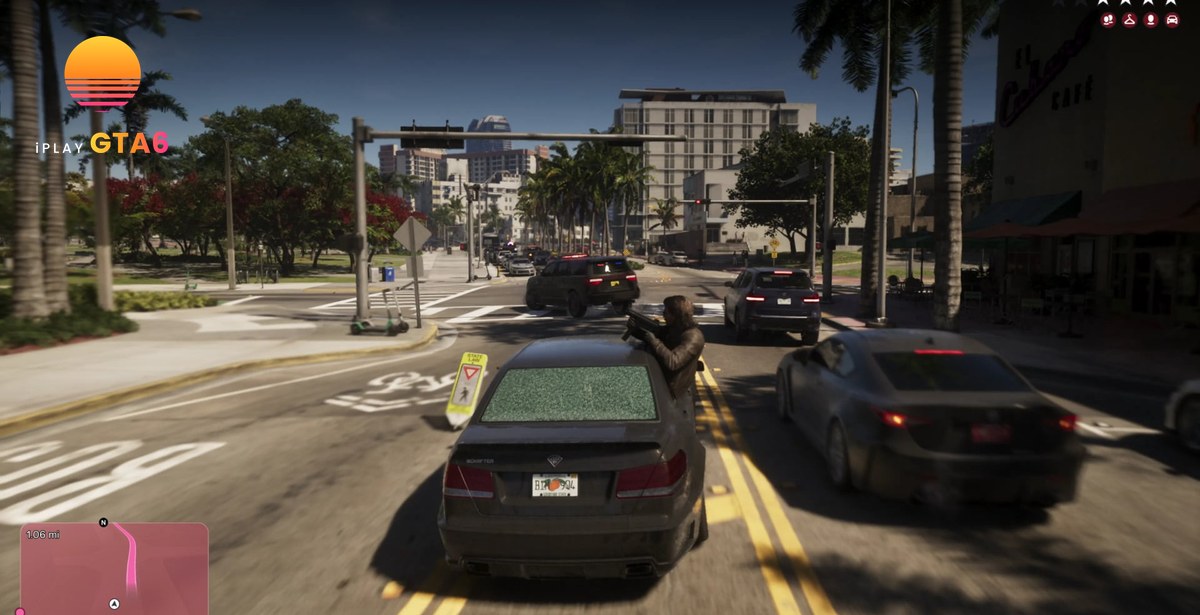
The biggest gameplay change from the new NPC systems is that police no longer know about a crime automatically. A crime has to be seen by a witness, set off an alarm, or be picked up by a GPS tracker in a stolen car. Officers then get a description of your face, clothes, weapon and vehicle. That description is the Heat system, and it is the closest thing GTA 6 has to the world remembering you.
Each part of the description clears a different way. Change your clothes to clear the clothing part, get a new haircut or wear a mask to clear your appearance, ditch or repaint the car to clear the vehicle part, and drop or stash the weapon to clear that part. A full outfit change is what counts: putting on sunglasses or a different hat does not clear it, which is why trunk storage for spare clothes is now a functional system. Our guide to lowering your criminal profile walks through every Heat icon and how to clear it.
The HUD shows separate indicators for which details the police actually know. Hollow wanted stars mean they are searching but do not have a description. Shedding heat means invalidating those descriptions, one by one. Our traffic laws guide covers what happens when the system catches you breaking the smaller rules too.
Your Criminal Profile Tracks How You Work
Rockstar's replacement for Red Dead Redemption 2's honour meter is called the Criminal Profile, and the distinction is professional versus sloppy. The system evaluates how you behave as a criminal. Robbing a store without hurting anybody and escaping cleanly can raise your profile, because you committed the crime professionally, while excessive violence lowers it.
Each partner has their own profile. A high profile changes how people and the police react to you, and it works as progression: bigger jobs open up as your criminal reputation grows, the same way more money opens up more of the map. Non-lethal play is a real option here. Reviewers kept a Professional rating by shooting guards in the knees or hands to disarm them rather than going for the fatal shot, and you can incapacitate enemies by wounding a limb or shooting the weapon out of their hands.
This is the long memory players feel in the first week. It is not one NPC holding a grudge forever. It is the profile, the Heat descriptions and the witness reports stacking up into a reputation that follows both characters.
Small Moments That Prove the Systems Talk to Each Other
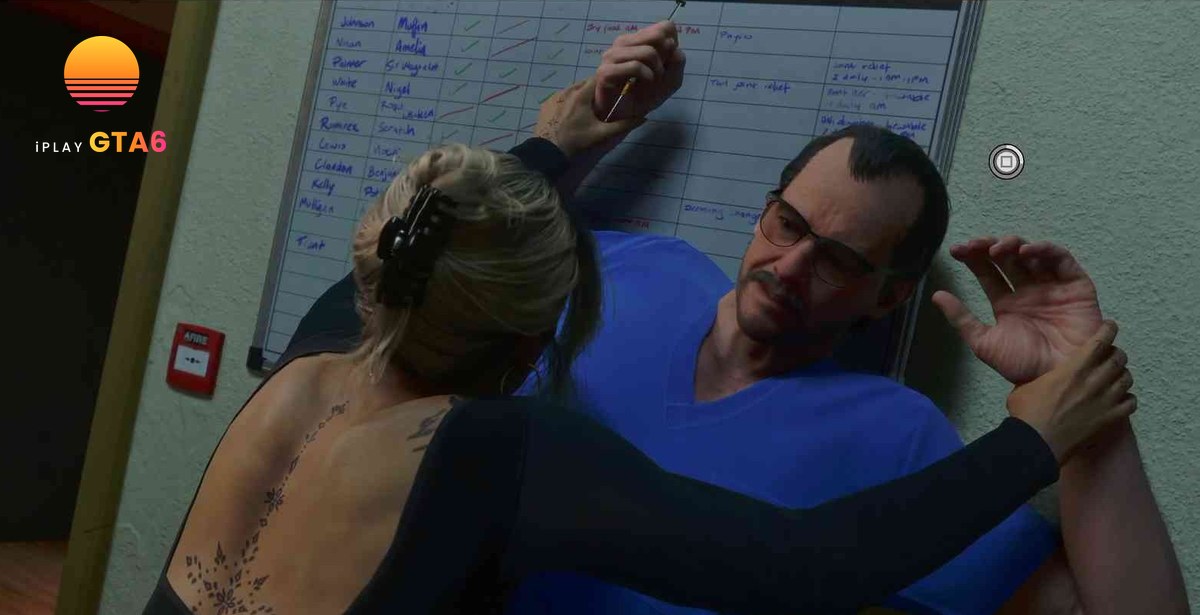
The best proof that Leonida's systems work together came from preview moments where ordinary systems combined into situations that felt unscripted. During a normal shop robbery, a frightened cashier revealed a safe in the back room, and the player had to choose between the bigger score and more time on the clock, or leaving with the cash already taken.
In another, two masked women got trapped mid-robbery and asked Jason and Lucia for help. You could help them, then take the jewellery yourself. Rockstar said its own testers had not seen that event for months, so treat random events as rare, not something you can farm.
Neither moment is the game writing a story for you. Both are hand-made scenarios. What is new is that a scared cashier, a trapped crew and a police response can combine into something that feels unplanned. That is the realistic meaning of a smarter open world in 2026.
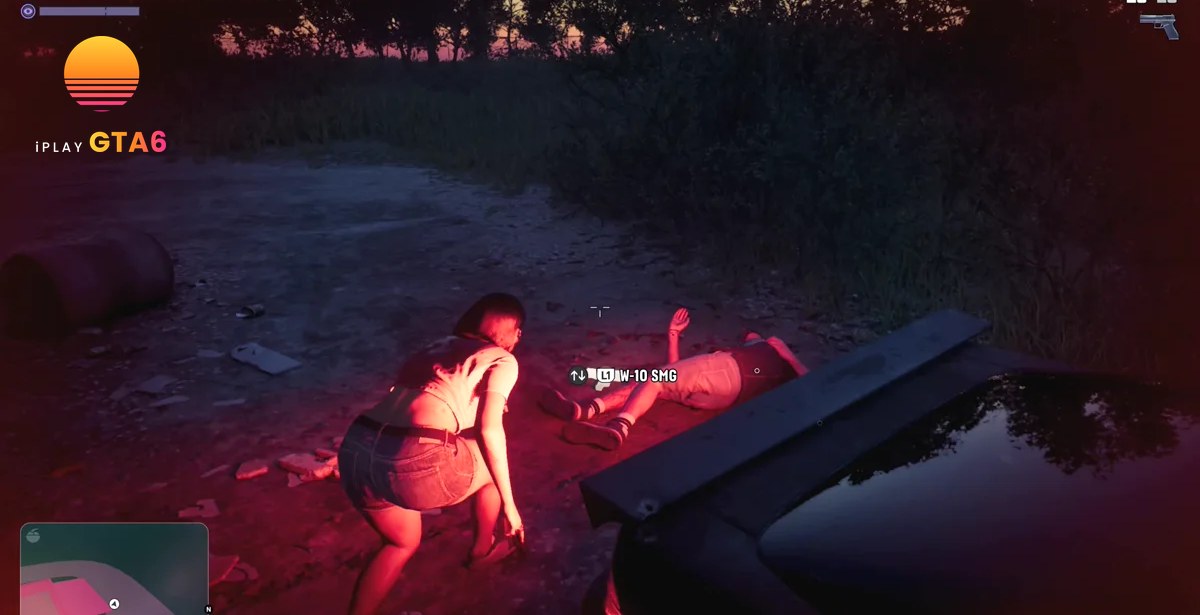
Even dropped items feed the loop. In a fight, an NPC dropped a hat and glasses that Jason could pick up and wear. That is a small detail with a big effect once the police are looking for a description of you, because a hat you picked off the pavement can be the difference between a description that matches and one that does not.

What Is Not Confirmed: Permanent Personal Memory
There is one claim doing the rounds that needs a clear label. Code names from the 2022 leak mentioned an "AIMemory" style system, and some posts present it as proof that individual NPCs permanently remember you and hunt you down days later. That has never been confirmed by Rockstar, and the leak material is from an unfinished build. Treat it as unconfirmed.
What is confirmed is narrower and, honestly, more useful: NPCs notice you in the moment, they confront you, they report you, and the Heat and Criminal Profile systems carry the consequences forward. A witness who saw your face is a problem you have to solve. A profile built on sloppy, violent jobs changes how the world treats you. That is memory with teeth, even if no single pedestrian is keeping a diary with your name in it.
The same caution applies to the "advanced AI" label. GTA 6 does not use generative AI. Take-Two CEO Strauss Zelnick has said generative AI has zero part in what Rockstar is building, and Leonida is handcrafted street by street. What people mean by smarter NPCs is game AI: hand-written behaviour systems, built by people, with far more options at each step than GTA 5 ever had.
How to Play Around People Who Watch You
Seven habits from the first week will keep you out of trouble. Look for witnesses before acting, because no witness, alarm or tracker means no wanted level. Keep your weapon holstered in crowds, since a visible gun changes how everyone around you behaves and some will try to take it. Try aiming before shooting: previews say a raised weapon alone can end a confrontation with no police call.
Do not hover around groups, because lingering gets noticed as eavesdropping and conversations change or stop. Carry a change of clothes, since a new outfit clears the appearance part of your Heat profile. Scan cars before you steal them, because tracked vehicles report your position. And re-explore familiar streets, because rare random events surprised even Rockstar's testers, so the same block can play out differently next time.
If you want more of the small systems that catch players out, our chair bump crime guide and our roundup of the most satisfying mechanics players love are good next reads.
Quick Questions
Do GTA 6 NPCs remember you?
They notice, confront and report you in the moment, and the Heat and Criminal Profile systems carry the consequences forward. A permanent personal memory for individual NPCs has never been confirmed.
Can NPCs confront you in GTA 6?
Yes. Follow someone too long, stare, or hang around a group eavesdropping and they may confront you, get aggressive, or walk away.
How many NPC animations does GTA 6 have?
More than 600,000, according to Rockstar, against around 55,000 in GTA 5 and 300,000 in Red Dead Redemption 2.
Do witnesses call the police in GTA 6?
Yes. A crime has to be seen by a witness, trigger an alarm, or be picked up by a tracker before police are alerted, and witnesses pass on a description of you.
What is the Criminal Profile in GTA 6?
It tracks how you commit crimes, rating you from professional to sloppy. Clean jobs raise it, excessive violence lowers it, and it affects how people and police react to you.
Can NPCs fight back in GTA 6?
Yes. Some flee or freeze when they see a weapon, others try to disarm you, and some are armed themselves. A dog owner can even set their dog on you.